Brothers Fire Protection offers commercial fire suppression & alarm system installation & inspection for Minnesota, Wisconsin, Iowa, North & South Dakota.

Showing posts with label fire sprinkler systems. Show all posts

Tuesday, February 19, 2013

Fire Suppression: Choosing an Effective System

When it comes to Brooklyn Park fire protection systems, it's important to choose one that helps to protect those assets that can't be replaced, like your family, friends, co-workers, employees, etc. As one article noted:

An effective fire suppression system is one of the most valuable investments one can make. They serve a two-fold security purpose: They can prevent fires from starting and spreading, and they also provide a sense of comfort to the owner, who knows his or her structure is equipped to deal with a blaze.
So, how do you about choosing the perfect system? You'll need to determine your budget, find possible installers, contact potential companies and finally narrow down the list to the final selection. The more time you're willing to invest in the research, the better off your final selection will be.

Read the entire article: "Choosing an effective fire suppression system."

Friday, May 18, 2012

Types of Fire Sprinkler Systems

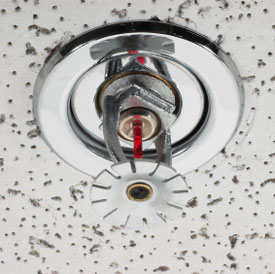
When you think of a fire sprinkler system, you might think of the ceiling-mounted system that covers an area in water when it detects a fire. This is one system, called a wet pipe system, and it's automatic device that supplies pressurized water to the room or rooms a fire has been detected in.

Another type of fire sprinkler system is called a dry pipe system. This type of sprinkler system is used in buildings that are unheated, as well as in refrigerated coolers and other cooler areas. This system is the second most common, after the wet pipe system, but is more expensive to install and keep in good condition.

A third type of sprinkler system is known as a deluge system. With a deluge sprinkler system, the sprinklers are actually open, allowing a greater flow of water from the pipes to the affected area. This can help put out a larger area of fire than the previous two systems.

The pre-action system is meant to not only protect life and extinguish fires, but also protect property. These systems are used frequently in museums and in other places where rare or expensive materials are kept.

Interested in learning more about which type of sprinkler system is right for you? Get in touch with Brothers Fire, an experienced Iowa fire protection company with over 10 years of experience. You can reach us by phone at (800) 607-2767.

Friday, May 11, 2012

How Fire Protection Systems Work

The modern-day fire protection system is a far cry from the one that was available to Iowa businesses a few decades back. In the past, fire protection consisted of a fire alarm system and a suppression system that merely tried to control a fire long enough for firefighters to arrive and finish the job. Today's fire protection system also couples an alarm and suppression system, but nowadays, a suppression system has the potential to completely knock out a fire on its own.

The most common system used for suppression is the sprinkler system. This often utilizes water, though other types of suppression agents (such as foam or gas) can also be used. When a fire is detected, usually by the presence of smoke in the air, the fire alarm portion of the protection system is activated, and the suppression system attempts to control and extinguish the fire as quickly as possible.

Brothers Fire has been helping Iowa businesses with their fire protection needs for the past decade. Interested in learning more about how we can help? Get in touch today by visiting our website.

Monday, April 30, 2012

Fire Safety for Your Business

Workplace safety should be high on the list of any employer, and fire safety is a big piece of the puzzle. There are a few steps you should take to make sure that your business is properly prepared for a fire, and that the necessary fire protection instruments are in place.

First, it's crucial that you have a risk assessment done to locate potential trouble spots or risks. Any potentially dangerous items noted in the risk assessment should be fixed as soon as possible.

Next, an evacuation plan should be developed that takes into account where someone is sitting and where the nearest exits are. One evacuation route is not one-size-fits-all in a large office. Back-up plans should also be developed in the event that the original plan isn't able to be followed during an emergency.

Finally, train your employees on the proper usage of fire extinguishing tools, and appoint a few people to lead an evacuation should one be necessary. And take fire safety and prevention very seriously; prevention is always less expensive than the damage you'll likely have to repair.

Address your fire protection and fire safety concerns for your Minneapolis business today. Call Brothers Fire at (800) 607-2767.

Monday, April 23, 2012

New Types of Fire Suppression Technologies

When most people think "fire suppression," they think of water-based sprinkler systems, and with good reason. For a long time, these were the most popular types of fire suppression systems. Today, however, there are a number of newer technologies that are starting to make inroads.

Compressed foam is one such fire suppression technology. This works in a similar way to a water-based sprinkler system, but won't damage electrical equipment like computers. Inergen is another type of fire suppressant that isn't new to fire protection specialists, specifically, but might be new to those who aren't familiar with the industry.

There will undoubtedly be more leaps in fire suppression technology as we move toward the future. Just know that water isn't the only source of protection! There are others that can help slow the growth of a fire or extinguish it completely, and actually cut down on damage done by the fire suppression system.

Contact Brothers Fire to talk more about how we can help your company with fire suppression!

Thursday, March 22, 2012

Interesting Facts about Fire Sprinklers

Fire sprinklers are effective tools in the fight against spreading fires in both homes and commercial office buildings. The fire sprinkler is not a new invention, nor an invention that came about in the past century. The concept behind the sprinkler is fairly old, and these devices have had quite a bit of time to accumulate some history. Here are some fun and interesting facts about fire sprinklers.

  • Fire sprinklers have been used in the United States since 1874.
  • It costs between $1-2 to build sprinklers into a new building, and between $1.50-2.50 to retrofit an existing building with sprinklers.
  • A 1988 survey found that nearly half of hotels and motels had sprinkler systems installed. The number is likely higher today.
  • Sprinkler installation makes up approximately 1% of the cost of a new building.
  • A fire has never taken multiple lives in a fully sprinklered building.
Brothers Fire can help install a new sprinkler system in your home or commercial property. To learn more, contact us today at (800) 607-2767.

Tuesday, January 31, 2012

Winterizing Your Sprinkler Systems


Along with annually maintaining and inspecting your fire sprinkler systems, business owners should be prepared to have their systems winterized on an annual basis. Whether the system is dry or chemical-based shouldn't make a difference in deciding whether to have it done.

Brothers Fire Protection of the Upper Midwest is more than capable of winterizing commercial fire protection systems. For more information on this valuable service, please see our Winterizing Fire Sprinkler Systems service page at www.BrothersFire.com

Thursday, January 19, 2012

The NFPA's Fire Sprinkler Initiative


The National Fire Protection Association (NFPA) has launched its Fire Sprinkler Initiative, and as part of this movement, it released this video of a single-head fire sprinkler system in action. Watch the video below or learn more about the Fire Sprinkler Initiative at www.FireSprinklerInitiative.org.


Thursday, January 5, 2012

Thursday, December 8, 2011

Fire Protection Job Opening at Brothers Fire Protection of Minnesota


Want to work for the Upper Midwest’s leading fire protection company? Do you have experience in an office environment? You might be what we’re looking for at Brothers Fire Protection.

We’re looking to hire a service coordinator/inside sales assistant. The position's duties include customer service and relations/ proposal and quote reports preparation; scheduling; dispatching; and much more. For functions and requirements, please check out the Employment page at www.BrothersFire.com to find out more information.

We're looking for a service coordinator/inside sales assistant. Find more information on our blog. 

Friday, December 2, 2011

Workplace Fire Prevention

Our commercial customers might be interested in sharing this video with the businesses residing inside a facility so it can be shared with employees. Fire prevention isn't just about having the proper fire safety equipment installed -- each person also must take the correct course of action to extinguish or escape from a fire should one occur in the workplace.


Monday, November 21, 2011

Making Sure Your Property Doesn’t Go Down in Flames


The Wichita Eagle recently reported:
Another factor is that new homes — in subdivisions that are sometimes located farther from fire stations — are built with thinner lumber and more open floor plans that make them burn faster, safety officials say.
 Source: http://www.kansas.com/2011/11/06/2091846/modern-houses-go-up-in-flames.html
And many of these homes don’t have sprinkler systems in them, the Eagle reported.

Fire sprinklers are a necessity for any home, but especially for any business. Here are some reasons why you should have your business outfitted with fire sprinklers:
  • The law: In most cases, fire sprinklers need to be installed in buildings. Just as is the case with fire extinguishers, not having them can mean you’re not following the law.
  • Fire line of defense: A great sprinkler system should be your property’s fire line of defense should a fire break out. It should be able to douse enough of the fire to prevent the damage from spreading, and allow your fire suppression system to handle the rest.
  • Automatic: With an automatic fire sprinkler system, your property will be protected from the moment a fire is detected. No worries about what to do.

Brothers Fire Protection offers commercial fire sprinklers in Minnesota.

Monday, October 31, 2011

Fire Alarm Systems Are a Business Necessity


As a business owner, you must think about what will happen if a fire were to break out. Without the proper preparation, you can lose all your investments, and suffer a loss of business, disruptions and financial strains. It can be hard to rebuild, and some find themselves unable to reestablish their business once they’re affected. For these reasons, it’s important to have equipped a functioning fire alarm system.

The alarm system you choose must be able to warn your employees of the danger. The first 1-2 minutes of a fire are the most crucial. When a fire strikes, you fire suppression system should go off, and with a reliable unit, you can ensure the safety of your business and manpower.

Your systems should also include the ability to warm local authorities about the fire. Once this happens, they can arrive and begin to resolve the issue, and protect your physical property.

Fire alarms can greatly protect your business. If you’re looking for a fire alarm system company in Minnesota, contact Brothers Fire at www.BrothersFire.com

Wednesday, December 22, 2010

How to Prevent Becoming the Victim of a Home Fire

  • Children 4 and under
  • Older adults ages 65+
  • African Americans and Native American Americans
  • The poorest Americans
  • Persons living rural areas

What do these groups have in common? If you said that they were the groups most likely to be the victims of a fire, then you would be correct. Of course, these groups are not the only ones affected by home fires. And, while these are sobering facts, consider these additional fire facts collected by the CDC:

  • On average, one person dies every 158 minutes due to a fire in the U.S.
  • 4 out 5 deaths due to fire occur in the home.
  • Most victims of fire die due to smoke or toxic gases and not from burns.
  • Males make up 64% of the total costs of fire/burn injuries incurring medical bills of $4.8 billion; females account for $2.7 billion in medical bills due to fire.
  • Fatal fire and burn injuries cost an average of $3 billion per year.

It seems like wintertime is one of the most common times of the year to hear about homes being burned. Perhaps it is because people get careless with their fireplace safety or maybe it's because we are so busy, that we overlook simple fire prevention steps. But whatever the cause, the result is always one of despair, distress and grief. And while the numbers of household fires have decreased in recent years, it has not been alleviated. There are many things we can all do to reduce the risk of becoming the victim of a house fire. Here are some basic fire prevention tips from the Center for Disease Control:

  • Never leave food unattended on a stove; this is the primary cause of residential fires.
  • Keep cooking areas free of flammable objects such as potholders, towels, etc...
  • Do not wear long flowing clothes-especially sleeves that are loose- when cooking.
  • Do not smoke in bed or leave cigarettes unattended; this is the leading cause of fire related deaths.
  • Do not empty smoldering ashes in a trash can and keep ash trays away from upholstered furniture and curtains.
  • Do not place portable space heaters near flammable materials such as drapery.
  • Keep all matches and lighters out of reach of children!
  • Install smoke alarms and sprinklers on every floor of the home and be sure they are in rooms where people sleep.
  • Check the batteries in smoke detectors frequently; a good rule of thumb is to check them whenever you adjust your clock for Daylight Savings Time.
  • Devise a family escape route and practice it at least monthly. In the plan, have at least 2 different ways each family member can get out from every room and designate a safe place in front of the home for family member to escape to.

Being the victim of a fire-no matter how large or small the fire- is a frightening, traumatic occurrence. Taking time to do all that you can to avoid being part of the statistics is worth it.

To learn more about how to prevent fires, visit Brothers Fire of MN.

Article independently authored by Janet Slagell. The content herein may or may not reflect the views and opinions of Brothers Fire Protection. Click for search engine optimization and search engine marketing or visit WebDrafter.com's Blog.

Wednesday, November 17, 2010

Fire Safety - University and Colleges Sacrifice Students' Safety For Financial Reasons

Fire safety and prevention is always paramount, but facilities with buildings constructed over twenty years ago may not meet and satisfy current fire code regulations. Nowhere is this more important than with colleges and universities, many with buildings constructed more than one hundred years ago. Protecting the country's youth does not always take a front seat, but proves to be costly every year.

One main problem regarding latent and potential fire hazards on school campuses pertains to housing and dormitories. Many of these structures which were built more than thirty years ago were not designed with present fire codes in mind. Many of these facilities relied upon the use of asbestos to help combat the threat of fire. Due to the health risks which asbestos presents, asbestos materials have been removed and replaced by safer building materials. In doing so, it has increased the risk of death and extensive property damage. Open stairwells, the lack of fire barriers, and the lack of fire or smoke dampers are just a few more of the crippling aspects of older dormitories. On-campus fraternities and sororities often share similar weaknesses.

Another consideration of a serious problem, although it is much more specific, affects those individuals in wheelchairs. Universities and colleges have added elevators in many older buildings to maintain compliance with accessibility requirements. While this allows wheel chair access to all floors of a building, in the event of a fire elevators are deactivated. Obviously the outcome of a fire in one of these buildings is easily predictable without incorporating areas of rescue assistance for wheelchair access.

Fire alarm panels and control systems have come a long way from the basic siren or bell system with which most adults may remember from elementary school. Today in addition to the traditional fire alarm systems, modern fire alarms, control panels and security systems have evolved into highly complex addressable computer panels and communication centers. Costs can easily exceed well beyond $20,000 for a fire control system in a university dormitory setting. The major obstruction to updating or upgrading these aging buildings is the growing budgetary limitations. The cost to retrofit many of these buildings is prohibitive. Much of the monies delegated to construction and infrastructure is tied up with new buildings and facilities. Schools may qualify for federal funding for the purpose of retrofitting and upgrading those structures which currently do not meet the minimum fire codes.

For more information on commercial fire alarms and fire suppression systems, please visit Brothers Fire Protection or call 800-607-2767.

Article independently authored by Daniel Elliott. The content herein may or may not reflect the views and opinions of Brothers Fire Protection. Click for search engine optimization and search engine marketing or visit WebDrafter.com's Blog.

Wednesday, November 10, 2010

Get the Facts About Fire Prevention

  • Fact:Each year in America there are more than 4,000 people who die as a result of fires.
  • Fact: Installing smoke alarms and a fire sprinkler system will reduce risk of death in a home fire by 82%.
  • Fact: 90% of home fires can be contained with just one sprinkler, the one closest to the fire, resulting in less water damage than of the fire department.
  • Fact: Modern fire sprinklers are inconspicuous and can be mounted so that they are flush with the ceilings or walls.
  • Fact: Home fire sprinkler systems only add 1 to 1.5% of the total building costs in new home construction.
  • Fact: A residential fire occurs every 76 seconds.
  • Fact:49% of all home fire deaths resulted from fires that were reported between 10:00 PM and 6:00 AM.
  • Fact: 17 people die in home fires every day.
  • Fact:18% of home fire deaths occurred in homes in which only a smoke alarm was in use.
  • Fact: Fire sprinklers save lives, reduce property loss and will even help lower your homeowner insurance premiums.

If you have never been the victim of a house fire, then you can only marginally relate to the feelings of desolation and loss. There is little in life that can prepare you for seeing the ashes of what was once your home. As you stand there, you can't help but think of the good times you shared within the walls of your home, of the special keepsakes that have been destroyed, the photos or scrapbooks that you lovingly placed in albums and many other reminders and mementos that contributed to who and what you are. Simply stated, a fire is one of the most devastating things that can occur in the life of anyone.

In addition to the emotional loss, the economical strain of a fire can take some time to recover from. After all, once you have received the insurance money, there is time spent to replace things such as clothes, household items like appliances and computers, groceries and many other things that one can so easily take for granted. Plus, there is the time you have to take off from work in order to get situated and settled in at new residence.

So, why should you become the victim of a home fire when it can be avoided? After all, there is an assortment of products available to prevent property loss due to fire. Even if you have a smoke alarm, it is not enough. Today, you can have a home sprinkler system installed that effectively puts out fires-in some cases, quicker than the fire department can arrive! There are many companies who specialize in installing home sprinkler systems and who will be happy to walk through your home to let you know how their system can save you the emotional and economical stress of a home fire. You don't have to become one of the statistics!

For additional information on the topic of home fire sprinkler systems visit Brothers Fire.

Article independently authored by Janet M. Slagell. The content herein may or may not reflect the views and opinions of Brothers Fire. Click for search engine optimization and search engine marketing or visit WebDrafter.com's Blog.

Thursday, October 14, 2010

8 Reasons You Should Have a Fire Protection System in Your Home

Your home and family are two of the most important "possessions" you have. And, as a responsible adult you want to protect them in every way you can. For the home or business owner, there are very few things more devastating than fire. And yet, many homes and offices still do not have an effective fire protection. If you think that you can beat the odds, and not need to get fire protection, then consider these facts from the National Fire Protection Agency.

  • Fires kill more people in America every year than all the natural disaster combined, with 80% of these deaths occurring in the home. In fact, nationwide, there are more than 4,000 people killed by fires.
  • Installing both smoke alarms and a fire sprinkler system reduces the risk of death due to a home fire by 82%
  • The NFPA has no record of a fire killing more than 2 people in a completely sprinklered public assembly, educational, institutional, or residential building where the sprinkler system was working properly.
  • According to the CDC, in 2008 fire departments responded to 403,000 home fires in the U.S. There were 2,755 (not including firefighters) deaths, and another 13,560 civilians injured.
  • Fire and burn injuries, in 2006, resulted in $7.5 billion dollars spent in medical care.
Basic Reasons to Choose a Fire Sprinkler System in Your Home

If you are still not sold on why you should have a fire sprinkler system in your home, for whatever reasons, consider these 8 statements:

  1. Fire hoses, typically use more than 8 1/2 times more water than sprinklers do to contain a fire, this is a difference of firefighters using 2,935 gallons of water versus the 341 gallons of water used by a sprinkler system. The ultimate result being that there is less water damage to items in the home, yet the fire is still contained effectively and efficiently. It should also be noted that only the sprinkler closest to the fire, and will spray directly on the fire.
  2. In 90% of home fires it is only necessary to use one sprinkler to contain the fire.
  3. The chances of a sprinkler accidentally discharging due to manufacturing defects are extremely rare. In addition, modern sprinklers provide inconspicuous protection.
  4. Installing a fire sprinkler saves lives, reduces property loss and can even lower homeowner insurance premiums.
  5. When you are building a new residence, having a fire sprinkler system added to the construction only increases building cost by 1-1.5%.
  6. The chances of a fire sprinkler not working are slim and are dependent on the plumbing system in the home. If the plumbing is functioning correctly, so will the fire sprinkler.
  7. In the majority of cases, a home sprinkler system can contain and potentially extinguish a fire faster than the fire department can arrive on the scene.
  8. Residential sprinklers systems can be recessed into the walls or ceilings, and some can be painted to match the room's decor.

For additional information on the topic of fire sprinkler systems visit Brothers Fire.

Article independently authored by Janet Slagell. The content herein may or may not reflect the views and opinions of Brothers Fire. Click for search engine optimization and search engine marketing or visit WebDrafter.com's Blog.

Monday, August 23, 2010

Fire Safety / How to Effectively Use a Fire Extinguisher

Nobody likes to imagine they would be put in an emergency situation and not know what to do. As a training exercise we often imagine in our head the steps we would take or what we need to do to help out. Frequently, in this thought exercise people consider a fire outbreak. Unfortunately, people feel fully prepared by simply confirming the location of fire extinguishers and reading how to activate the device. This is all well and good but often the question of how to actually employ the device is overlooked. There are specific techniques to utilize when fighting a fire and not adhering to them can cause your efforts to be entirely ineffective. That can be a scary thought!

In order to properly employ a fire extinguisher, remove it from its storage spot, aim it away from yourself and pull the pin. The device is now ready to use.

Get as close to the flames as you can without risking your own safety. Aim the extinguisher at the base of the flame where it meets whatever fuel source it is burning. A fire can flame up very high and it can be tempting to aim at this mass. Doing so is completely ineffective as the extinguishing agent simply passes through the flame. By aiming at the base of the fire you are covering the fuel source and preventing the fire from burning.

Sweep the extinguisher from side to side to cover the entire base of the fire. Only extinguishing a section of the fuel source will not stop the fire. Additionally, walk closer to the fire as it is going out to ensure of maximum effect. Again, do not compromise your safety while doing so.

Additionally, be certain to let go of the extinguisher handle once the fire is out. This might seem obvious but it is not uncommon for an extinguisher to have about ten seconds of extinguishing agent. You could run out of extinguishing agent if you have to fight a second flame and don't release while moving to the new fire.

Finally, before using the extinguisher, make sure it is rated for the type of fire you have. Not all extinguishers work for all fuel types. Check the labels and make sure you have an appropriate extinguisher before applying it to a flame.

Hopefully, these tip will help you effectively put out any fire you might have to fight. But lets hope you never have to use this skill!

For more information on fire extinguishers visit http://www.BrothersFire.com.

Article independently authored by Eric Parish. The content herein may or may not reflect the views and opinions of Brothers Fire.
Monday, August 9, 2010

Fire Alarms & Fire Protection Learn How to Avoid Death and Injury If Your House is on Fire

We all know of people that have had their home burn to the ground. It is a horrible thing to have happen but what would you do if your home caught on fire? Do you know how to react or what actions to take? Does your family? A little preparation and discussion of what to do can go a long way toward making sure your family survives a house fire.

The first thing to discuss and explore are escape routes. Does everybody know all the ways to get out of the house? Is it possible to climb out a window and escape via the roof. This is not a normal exit but could work during a fire. Are there routes that have challenges such as doors that stick and are inoperable by children. Are there routes that could work if an escape ladder were kept nearby? Explore your home and educate everybody on all the ways to exit the home. Also, be sure to designate who will help children or the elderly in the event of a fire.

If you do find yourself in a blaze and need to escape, it is imperative move cautiously and be aware of your surroundings. For instance, don't just open a door automatically as you would ordinarily do. There could be a raging fire on the other side and door is preventing it from reaching you. Before opening, check for smoke seeping under the door or around the edge. If you see smoke do not open the door and find a different route. Likewise, do not open any door that is hot or very warm. Opening a door under these circumstances can alter air flow and cause a smoldering fire to burst into an inferno.

Most people are killed by smoke and fumes during a fire and not the actual blaze. Drop to your knees and crawl along the floor if you find yourself in a smoke filled environment. Smoke rises and there is typically a foot or two of smoke free air just above the floor. Cover you mouth and nose with a wet cloth if possible. This will act as a filter and provide greater protection from the smoke.

Be sure that you have established a rally point for everybody to congregate once out of the house. In this fashion, you will know if somebody is missing. Call the fire department once you have reached this point. Do not call from within the house as this will delay your exit and increase your risk of harm.

Be sure to discuss with your children that they should not hide under furniture or other objects. This make it harder to locate them. Children should remain in the open or near a window when possible.

Finally, practice your home fire drill quarterly. Everybody should be able to exit within three minutes. Be certain to vary the drill by imagining that certain escape routes are blocked. Also, practice how to deploy and use escape ladders so that it is second nature. Trying to figure out how to use the device during an emergency is clearly to be avoided.

With a little practice and discussion, you can make your family more safe and provide peace-of-mind. Don't delay and risk being a sad story on the nightly news - start today!

Visit http://www.brothersfire.com to learn more on this topic and for information of fire safety equipment.

Article independently authored by Eric Parish. The content herein may or may not reflect the views and opinions of Brothers Fire.

Tuesday, June 8, 2010

Commercial Or Business Fire Sprinkler Choices - Which Suppression System Will Work the Best?

Commercial and residential fire sprinkler systems and other fire suppression systems have one goal: extinguish the fire in order to prevent and minimize property loss and lives. To this end, there are approximately 6 different types of fire sprinkler systems used throughout the U.S., wet pipe, dry pipe, deluge and pre-action, foam water, and "water spray systems". The two most commonly installed sprinkler systems in commercial environments and businesses are wet pipe systems and dry pipe systems.

Wet pipe sprinkler systems are the most popular type to have installed for a number of reasons. These systems are the simplest in function and therefore the most reliable. As expected, when the temperature of an area reaches a pre-set level, the glass bulb or link located at the affected sprinkler head releases allowing the flow of water. The cost of a wet pipe system is also usually the most inexpensive to have installed and maintain. Dry pipe systems are similar in operation with one key difference. Portion of lines leading to the fire sprinkler heads are filled with air. When the temperature at each individual head exceeds the pre-set limit, the individual sprinkler head is activated.

The air filling the line is expelled, then replaced with the water supply pushing in behind. The intended purpose of a dry pipe system is to allow for freezing temperatures and greatly lowering the risk of a freezing water line causing a rupture. A system such as this type can be less effective initially in extinguishing a fire due to the delay of water reaching the sprinkler head and dousing the fire. Increased cost of installation and maintenance, as well as complexity, can be a downside to installing this type of fire suppression system. Deluge systems and pre-action systems are similar to one another in that both are activated by some type of fire alarm system.

Deluge systems are common where the risk of fire spreading quickly is a concern. Deluge sprinkler systems, when activated simply spray water from every sprinkler head simultaneously instead of individual sprinkler head activation. Pre-action system can essentially be a combination of wet, dry and deluge systems. The advantage of a pre-action system is that it can send a trouble alarm should some problems occur without activating a sprinkler head. Some of this type of fire sprinkler system can also be set up for operation only when the temperature at a sprinkler head has exceeded the pre-set and a fire alarm is activated as well, essentially serving as a double check.

Foam water and "water spray" systems are usually installed where potentially hazardous materials are located and sensitive equipment. A mixture of foam and water helps to suppress the fire while the latter system sprays water in a particular spray pattern. These last two systems are not necessary for the majority of commercial businesses. Having any of these fire sprinkler setups is not enough.

Proper maintenance, as with any machinery, is necessary for successful operation. Depending upon the individual state or even local city laws, fire sprinkler systems are required to be inspected at least once per year, often more frequently. In order to receive discounts on insurance, insurance companies will sometimes require proof of inspection. Regardless of what type of fire sprinkler system being used, the cost of installation and maintaining the system will be miniscule compared to the loss of property, life and future revenue.

For more information on fire safety, fire alarms, and fire suppressions systems, please visit www.brothersfire.com.

Article independently authored by Daniel P. Elliott. The content herein may or may not reflect the views and opinions of Brothers Fire.